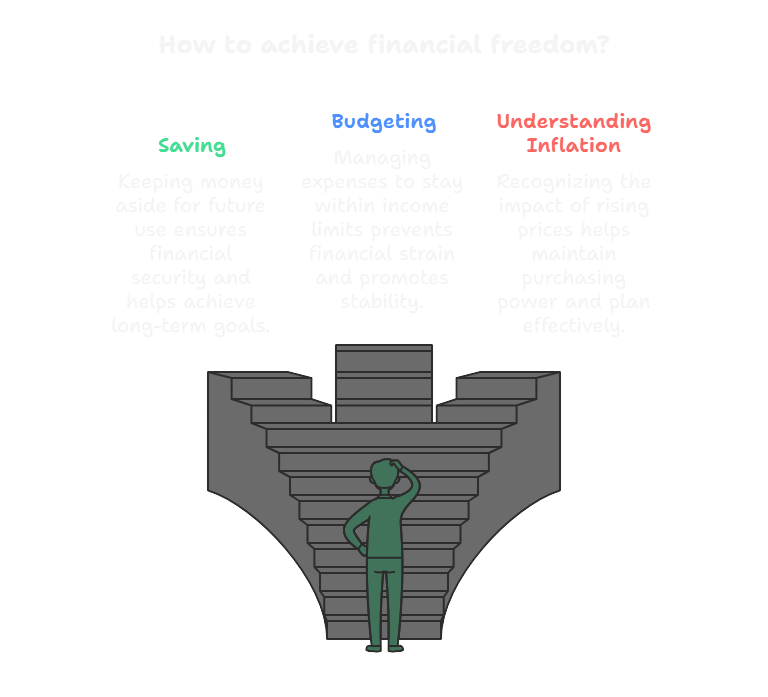

Ever felt like investing is only for rich people? Like you need ₹50,000 or ₹1 lakh to begin? That mindset is exactly why many people stay stuck—earning money, saving a little, but never truly growing it.
Here’s the truth: you can start investing in India with as little as ₹500 per month through a SIP (Systematic Investment Plan). And once you start, the habit becomes your biggest asset.
In this guide, I’ll explain investing in the same simple and relatable way—no complicated jargon, no heavy theories—just what you need to take action.
What Is Investing (In Simple Words)?
Saving = keeping money aside.
Investing = putting that saved money in a place where it can grow over time.
If saving is planting a seed, investing is watering it so it becomes a tree.
Because if your keep your money just in a savings account, inflation quietly reduces its value every year. That’s why investing matters.
Why SIP Is the Best Way to Start With ₹500
A SIP (Systematic Investment Plan) is a method where you invest a fixed amount (like ₹500) at regular intervals (mostly monthly) into a mutual fund.
Many fund houses allow SIPs starting at ₹500 per month.
Why beginners love SIP:
- You don’t need a big amount at once
- It builds investing discipline automatically
- It reduces the pressure of “timing the market”
- It fits easily with monthly salary budgeting
First Understand This: Mutual Funds Are Not One Thing
“Mutual fund” is not one product. It is a basket of investments managed by professionals.
There are different types:
1) Equity Funds (Higher Risk, Higher Growth Potential)
They invest in company shares (stocks). Good for long-term goals (5+ years).
2) Debt Funds (Lower Risk, Lower Growth Potential)
They invest in bonds and fixed-income instruments. Better for short-term and stability.
3) Hybrid Funds (Balanced)
Mix of equity + debt. For people who want a middle path.
If you are a complete beginner, you can start with a diversified/index-oriented option rather than risky sector funds.
Who Should Start Investing With ₹500?
If you are:
- A student saving small amounts
- A fresher earning ₹15k–₹30k
- Someone struggling to save big
- Someone who wants to build discipline first
Then starting small is not “too small”. It is smart.
Because investing is not about one big step. It is about consistency.
Step-by-Step: How to Start Investing (₹500 SIP)
Step 1: Build a Small Emergency Buffer First
Before investing, try to keep at least a basic buffer for emergencies (even ₹5,000–₹20,000 slowly). Your investing should not break if life throws a surprise.
Step 2: Complete Your KYC
KYC = Know Your Customer. It’s a one-time process needed for mutual funds.
Step 3: Choose the Right Platform (Simple Options)
You can start SIP through:
- Your bank (easy but sometimes higher costs/limited options)
- A mutual fund website (AMC website)
- Popular investment apps/portals (easy UI, quick SIP setup)
Step 4: Select a Fund Type That Matches Your Goal
Ask yourself:
- Goal within 1–3 years? prefer safer options (avoid heavy equity risk)
- Goal 5+ years? equity-based funds can make sense
Step 5: Start the SIP and Automate It
SIP works best when it is automatic: fixed date, fixed amount, no stress.
The Biggest Beginner Confusion: “Direct” vs “Regular” Plan
Mutual funds often come in two plan types:
- Regular Plan: includes distributor commission
- Direct Plan: no distributor commission (usually slightly better long-term)
If you’re investing through many apps/online portals, you’ll commonly see “Direct” options. If you invest via an agent, it’s often “Regular.”
(Choose based on your comfort. If you can do it yourself, Direct is generally more cost-efficient.)
Real-Life Example: What Can ₹500 Actually Do?
Let’s keep it real: ₹500 per month looks small, but the power comes from time + consistency.
- ₹500/month = ₹6,000/year
- In 5 years = ₹30,000 (your own contribution)
Now, add market-linked growth over time, and the difference becomes meaningful. The longer you continue, the more compounding starts helping you.
The main goal of starting with ₹500 is not “getting rich fast.”
It is building the habit that makes bigger investing easy later.
7 Mistakes Beginners Must Avoid
1) Expecting quick money
Investing is a long game. If you want fast profit, you’ll panic in volatility.
2) Stopping SIP after a market fall
Market falls are normal. SIP is designed for this. Don’t quit at the worst time.
3) Picking funds just because someone said “best fund”
There is no universal best. Your goal and time horizon decide what’s best for you.
4) Investing without emergency money
If you invest everything and an emergency comes, you’ll withdraw at the wrong time.
5) Too many funds too early
Start with one or two, learn slowly.
6) Ignoring time horizon
Equity needs time. If you need money in 12 months, don’t take high risk.
7) Not reviewing once a year
Once a year, check if your SIP amount and goals have changed.
Bonus: What If You Want “Safe” Investing Instead?
If you want very low-risk and government-backed options, India also has routes like government securities through RBI’s Retail Direct platform (but these usually require higher minimums than ₹500 SIP).
So if your objective is:
- Small amount + Simple start + Long-term growth habit
SIP remains one of the most accessible entry points.
Quick Action Plan (Do This Today)
- Decide your goal (short-term or long-term)
- Keep a small emergency buffer starting
- Complete KYC
- Start one SIP of ₹500
- Continue for 6 months without stopping
- Increase by ₹100–₹500 whenever your income grows
That’s it. No perfection required—just consistency.
Final Thoughts: Start Small, Start Now
Most people don’t lose financially because they earn less. They lose because they delay starting.
Inflation doesn’t wait. Expenses don’t wait. Life doesn’t wait.
So even if you start with ₹500, you’re already ahead of the majority—because you are building the system that creates wealth.
Remember:
It’s not about how much you invest first.
It’s about how long you stay invested.
DISCLAIMER
This website’s materials are for educational and informational purposes only and are not intended for use as investment, financial, or lawful advisory services of any sort. All situations will be different and plans or illustrations here will not be applicable in your own situations. You are strongly advised to consult these materials and any questions you might have with a professional advisor who is competent and familiar with your personal and business needs, objectives, and financial conditions. We cannot promise accuracy, completeness, or use of information provided through this website. By using this website, you agree the author(s) and publisher(s) of this website will not be liable for losses, damages, or liabilities resulting from your own economic decisions.