
Equity vs Debt vs Hybrid – A Simple Guide for First-Time Investors
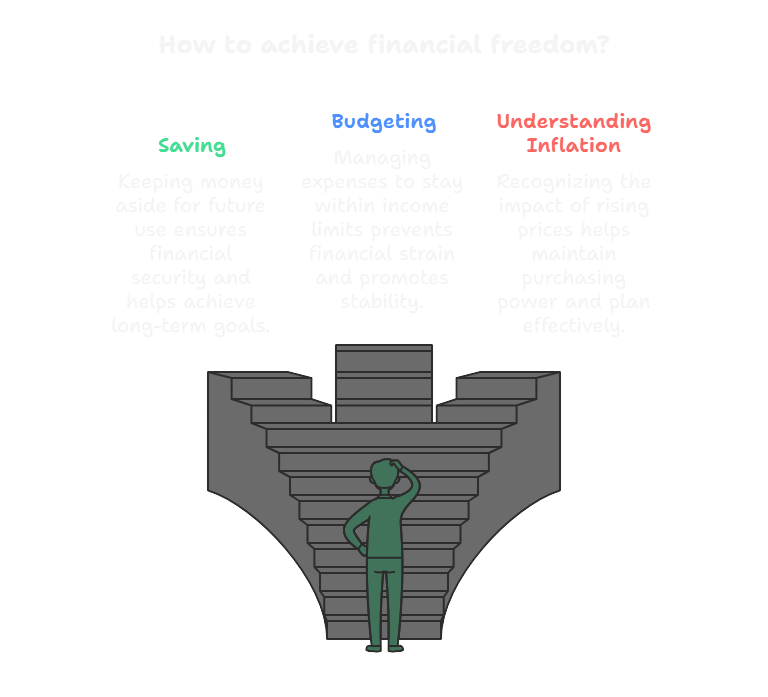
In your earlier articles, you learned why saving is important, how budgeting keeps your money under control, and how inflation silently reduces the value of idle cash. Then you discovered how easy it is to start investing with just ₹500 through SIP.
Now comes the next natural step in your financial journey. When you open any investment app or website, you suddenly see many confusing options — equity fund, debt fund, hybrid fund, large-cap fund, short-term fund, balanced fund. At that moment, almost every beginner asks the same question:
“Which mutual fund type is actually right for me?”
If you feel confused, don’t worry. You are not lacking knowledge — you simply haven’t been guided properly yet. This article will explain everything slowly, clearly, and in simple everyday language. By the time you finish reading, you will understand exactly what equity, debt, and hybrid funds are, how they behave, and how to choose the right one for your own life situation.
FIRST, WHAT EXACTLY IS A MUTUAL FUND?
Before comparing types, let’s build a simple picture in your mind.
Imagine 1,000 people each contribute some money. That collected money is handed to a professional fund manager whose job is to invest it in different places — company shares, government bonds, or other financial instruments. Whatever profit or loss happens is shared by all contributors based on how much they invested.
So when you invest in a mutual fund, you are not gambling alone. You are joining a large group of investors whose money is being managed professionally. This reduces individual risk and removes the pressure of picking stocks yourself.
Now depending on where the fund manager invests your money, mutual funds are classified into different types. For beginners, the three most important types to understand are:
Equity Funds, Debt Funds, and Hybrid Funds.
Think of them as three different vehicles for your financial journey — one is fast but bumpy, one is slow but smooth, and one is balanced in between.
1) EQUITY FUNDS – THE ENGINE OF LONG-TERM WEALTH
An equity mutual fund invests most of its money in company shares. That means when you invest in an equity fund, you become a small owner in multiple businesses — technology companies, banks, automobile firms, FMCG brands, and more. As these companies grow over the years, the value of their shares increases, and so does your investment.
However, business growth never happens in a straight line. Some months the stock market goes up. Some months it falls. That is why equity funds show ups and downs in the short term. But if you stay invested for many years, the long-term trend of growing businesses generally works in your favor.
This is why equity funds are best suited for long-term goals. If you are young, earning your first salary, or even a student starting small SIPs, time is your biggest advantage. You can allow your investment to grow slowly without worrying about short-term market movements.
Real-life example
Rohit is 23 years old and has just started his first job with a ₹25,000 salary. He decides to invest ₹1,000 every month into an equity mutual fund through SIP. In the first year, he notices something interesting — some months his investment value is slightly lower than what he put in. Other months it is higher. If Rohit watches daily, he may feel nervous. But Rohit remembers one thing: he is investing for the next 10–15 years, not for tomorrow.
After a few years, his salary increases. He increases his SIP slowly. By the time Rohit reaches his mid-30s, the habit he started with just ₹1,000 has grown into a meaningful wealth-building system. All because he chose the right fund type for a long-term goal.
The lesson: Equity funds reward patience. They are not for quick money — they are for long-term financial growth.
When equity funds are NOT suitable
If you need your money in the next one or two years — for a phone, wedding expenses, or a business purchase — equity funds are not the right choice. The market could fall at the wrong time, and you may be forced to withdraw at a loss. So always match equity funds with long-term goals.
2) DEBT FUNDS – THE HOME OF SAFETY AND STABILITY
Debt mutual funds work differently. Instead of investing in company shares, they invest in bonds, government securities, treasury bills, and other fixed-income instruments. In simple terms, your money is being lent to governments or strong institutions, and in return, you earn interest.
Debt funds usually do not show wild ups and downs like equity funds. Their returns are more stable and predictable. That is why they are often used as a better alternative to keeping money idle in a savings account.
For beginners, debt funds are extremely useful for short-term goals and emergency funds. They allow your money to grow slightly better than a normal savings account while still remaining relatively safe and accessible.
Real-life example
Neha runs a small boutique business. Her income is not fixed every month. She knows she must always keep emergency money ready. Over time, she saves ₹60,000 as her safety fund. Instead of leaving it in a savings account where it earns very little, she places it in a low-risk debt mutual fund.
Her money remains stable. It grows slowly. And whenever she needs funds for an urgent business expense or medical situation, she can withdraw without stress. She is not worried about market crashes because debt funds are designed for stability.
The lesson: Debt funds protect your money from sitting idle while keeping risk low.
When debt funds are NOT suitable
If your goal is long-term wealth creation — like retirement or buying a house after 15 years — debt funds alone may not grow fast enough to beat inflation significantly. They are excellent for safety, but not powerful wealth builders.
3) HYBRID FUNDS – THE BALANCED MIDDLE PATH
Hybrid funds combine both equity and debt in one single fund. Part of your money is invested in stocks for growth. Another part is invested in fixed-income instruments for stability. This balance makes hybrid funds very attractive for beginners who want growth but feel nervous about full exposure to stock markets.
Hybrid funds smooth out extreme ups and downs. When stock markets fall, the debt portion provides support. When markets rise, the equity portion captures growth. This makes hybrid funds a comfortable starting point for cautious investors.
Real-life example
Amit is 30 years old and earns ₹40,000 per month. He wants to start investing but feels scared after hearing stories of market crashes. He chooses a hybrid fund and starts a ₹1,500 SIP. Over time, he sees moderate growth without extreme volatility. This builds his confidence. After a few years, once he fully understands markets, he may even add an equity fund. But his first step was balanced and comfortable.
The lesson: Hybrid funds help beginners enter investing without fear.
A SIMPLE COMPARISON TO REMEMBER
Think of it this way:
- Equity Fund → High growth engine
- Debt Fund → Safety parking zone
- Hybrid Fund → Balanced family car
Each has a purpose. None is “good” or “bad.” It only depends on your goal and time horizon.
HOW TO CHOOSE THE RIGHT FUND TYPE FOR YOURSELF
You don’t need complex calculations. Just ask yourself three honest questions:
- When will I need this money?
- Can I emotionally handle market ups and downs?
- Do I already have emergency savings?
Your answers will guide you naturally to the right category.
This is exactly how professional investors think — not by guessing returns, but by matching funds to goals.
PREVIOUS ARTICLES
Earlier, you learned:
- Saving creates the money to invest
- Budgeting keeps SIP regular
- Inflation forces your money to grow
- SIP makes investing easy
Now:
Mutual fund types decide how your money behaves after you invest.
This completes your beginner finance foundation.
FINAL THOUGHTS – START SIMPLE, GROW SMART
Many people waste months searching for the “perfect” mutual fund. But the truth is, perfection is not required to start. A simple equity fund for long-term, a debt fund for safety, or a hybrid fund for balance — each is a correct first step when chosen with purpose.
You don’t need to know everything on day one. You only need to start, stay consistent, and keep learning. Over time, your confidence will grow along with your money.
Start small. Stay consistent. Let time do the heavy lifting.
DISCLAIMER
This website’s materials are for educational and informational purposes only and are not intended for use as investment, financial, or lawful advisory services of any sort. All situations will be different and plans or illustrations here will not be applicable in your own situations. You are strongly advised to consult these materials and any questions you might have with a professional advisor who is competent and familiar with your personal and business needs, objectives, and financial conditions. We cannot promise accuracy, completeness, or use of information provided through this website. By using this website, you agree the author(s) and publisher(s) of this website will not be liable for losses, damages, or liabilities resulting from your own economic decisions.